When a Small Dehumidifier Is Not Enough: UK Fit Checks
Short answer: a compact dehumidifier can help with mild, localised condensation, but it is not a fix for a leak, poor ventilation, soaked building fabric or a room that keeps taking on moisture faster than a small unit can collect it.
Use the question as a boundary check. Before buying, match the job to the unit’s confirmed facts, then decide whether the room first needs airflow, heat, repair work or a larger moisture-control approach.
Signs a small unit may be the wrong tool
- Condensation returns quickly after windows, walls or tiles have been wiped dry.
- The damp patch is tied to a leak, blocked gutter, roof issue, plumbing fault or visible water ingress.
- The room has very little airflow, frequent wet laundry, or a cold surface that keeps collecting moisture.
- You need whole-house drying, post-flood drying or fast drying of building materials.
- The tank would need attention so often that the unit would be ignored or left full.
How the Csmart Air unit should be framed
The current Csmart Air listing describes the YP2318 white single-core dehumidifier with a UK plug, 60 W rated power and a listed maximum collection rate of 650 ml per 24 hours. That makes it easier to judge as a compact helper, not as a promise that it can solve every damp problem.
| Situation | Better next check |
|---|---|
| Light condensation in a small spot | Check airflow, temperature and whether a compact unit is practical to empty and position. |
| Persistent damp smell or spreading marks | Look for the moisture source before relying on any plug-in appliance. |
| Bathroom or kitchen moisture | Use extraction and ventilation first; keep electrical appliances away from direct splashing water. |
| Basement, leak or building-fabric moisture | Investigate repair and ventilation needs rather than treating collection rate as a cure. |
Pre-purchase checks
- Confirm the room job: mild condensation control, not structural drying.
- Check where the unit can sit safely with a UK plug and ordinary indoor clearance.
- Read the current product page and manual because reservoir-capacity information varies.
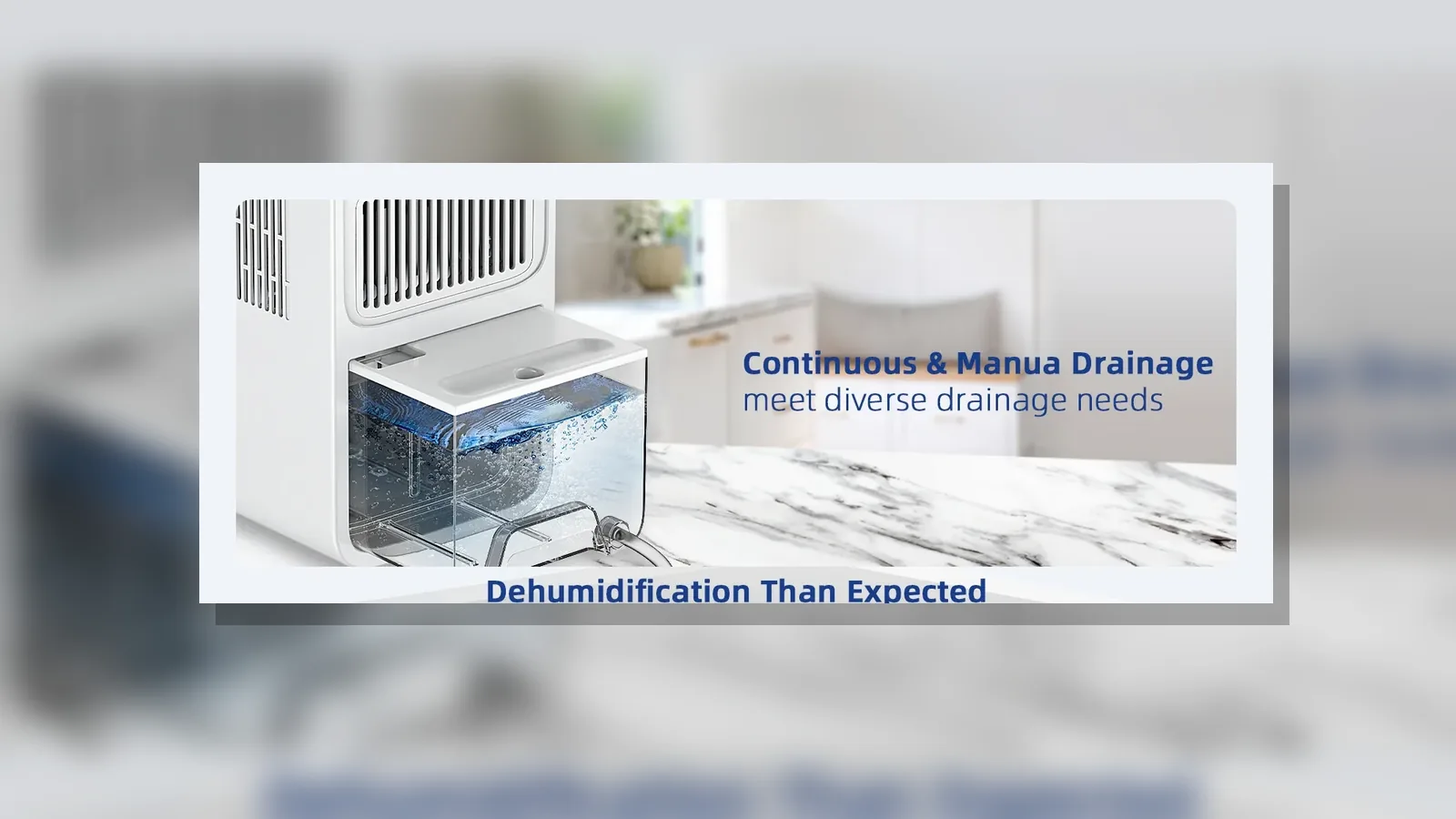
- Do not assume a drainage hose, automatic full-tank behaviour or noise level unless the supplied documentation confirms it.
- Compare running time with your own electricity tariff if energy cost matters.
When to pause before buying
If the moisture source is unknown, first find out why the room is damp. A small dehumidifier can collect water from the air, but it cannot repair a leak, replace ventilation or prove that mould risk has been removed.
Next step
For the confirmed model, price and current specification notes, read the current product details page before deciding.