Dehumidifier for Kitchen Condensation UK: After Cooking Checklist
For a dehumidifier for kitchen condensation UK households should treat after cooking, cut steam at source first—lids on pans, extractor on, kitchen door closed—then use a compact unit only for residual humidity once cooking has stopped and the room is clear of splash and hob heat.
Direct answer: reduce steam at source first, then decide if a dehumidifier helps residual humidity
Kitchen condensation is usually a short, intense moisture burst from boiling, simmering and dishwashing. Ventilation and extractor use address that burst far better than any portable unit running beside the hob. A dehumidifier is more useful afterwards, when humidity stays high and you still see damp signs such as window condensation, musty smells or mould risk in persistently humid rooms.
Independent UK guidance typically points to an indoor relative humidity band of about 40–60%, with mould risk rising when levels stay above 60%, and recommends hygrometers, ventilation, extractor fans and dehumidifiers where condensation is severe. See the Centre for Sustainable Energy advice on condensation, damp and mould and this practical UK guide to whether you need a dehumidifier.
UK kitchen moisture sources checklist (lids on pans, extractors, door closed)
Before you buy kit, run through this after-cooking and during-cooking checklist:
- Keep lids on pans wherever practical to limit steam escaping into the room.
- Use the cooker hood or extractor on a suitable setting while you cook, and leave it running briefly afterwards if steam is still visible.
- Close the kitchen door so moisture does not drift into cooler hallways and bedrooms.
- Wipe down cold surfaces that have fogged (window glass, tiles, worktops near the hob) once cooking ends.
- Check that trickle vents or other planned ventilation paths are open, not blocked by curtains or furniture.
- Note recurring clues that humidity remains too high: morning window condensation, musty smells, or mould on cooler walls and seals.
Where a portable unit can sit safely away from splashes and hobs
A portable dehumidifier is not a splashproof kitchen appliance. Place it only after cooking has finished and the hob area has cooled, on a flat, stable surface well clear of sinks, kettles and frying pans. Keep the unit away from splash zones and hob heat, and leave breathing space around it—placement guidance for the compact YP2318 white UK-plug model is to keep the unit on a flat surface at least 20 cm from walls.
Do not site the machine on a wet worktop, under an open pan, or where steam and grease can blow directly onto the casing. If the kitchen is still actively producing steam, prioritise the extractor and lids rather than moving a dehumidifier closer to the hob.
When extractor repair or trickle vents matter more than buying kit
A dehumidifier does not replace a working cooker hood. If the hood is weak, noisy in a way that stops you using it, disconnected from a duct, or simply never switched on, fix that habit or repair first. The same applies when trickle vents are sealed shut or windows never open after heavy cooking: residual damp then spreads through the dwelling rather than leaving at source.
Buy a dehumidifier only when source control is already in place and humidity still sits high in a small room. In severe condensation cases, UK advice pairs ventilation and extractors with dehumidifiers rather than treating the appliance as a substitute for them.
Who should not rely on a compact dehumidifier alone (leaks, severe mould)
Do not treat a small portable unit as the fix for:
- Plumbing leaks, roof leaks or rising damp—these need diagnosis and repair, not moisture collection alone.
- Widespread or severe mould that keeps returning despite ventilation—seek appropriate professional or housing advice for the building defect.
- Ongoing steam while you cook—extractor use and lids remain the first line.
A compact dehumidifier is better framed as support for residual humidity in a contained space after cooking, not as sole protection against structural damp.
Next step for small-room residual humidity
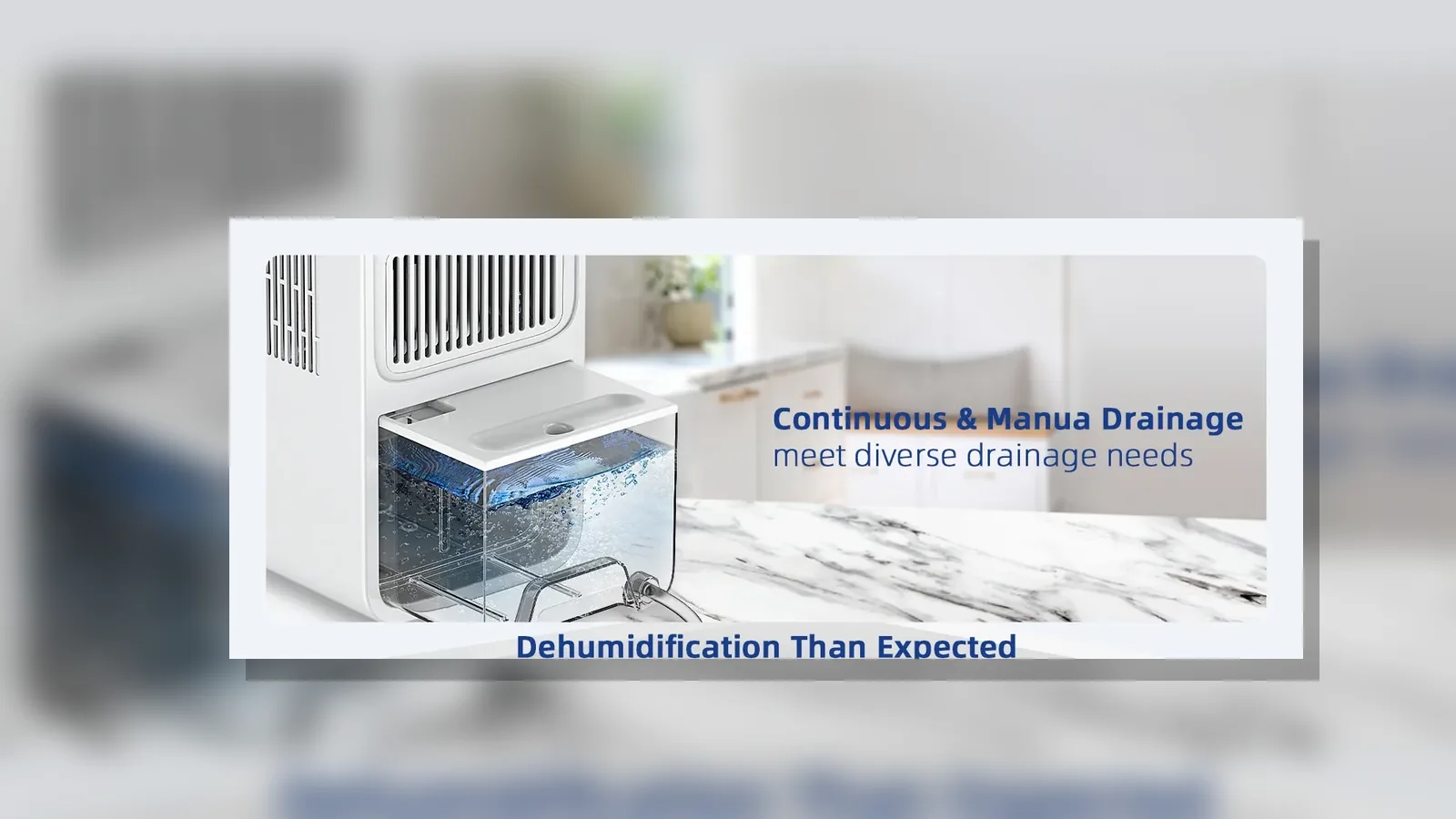
If source control is already sorted and you still want help with leftover humidity in a smaller room, the white single-core YP2318 with UK plug is listed at 220 V, 50–60 Hz, 60 W, with a maximum listed collection of 650 ml per 24 hours and a 12-month retailer warranty. Reservoir capacity and continuous drainage details are not consistently specified on the live pages, so check the current listing before you buy.
Review the current YP2318 dehumidifier product details if a compact UK-plug unit fits that residual-humidity use case.
FAQ
Is a dehumidifier for kitchen condensation UK cooking steam enough on its own?
No. Cut steam at source with lids, extractor use and a closed door first. Use a dehumidifier afterwards for residual humidity, not as a replacement for a working cooker hood.
Where should I put a kitchen steam dehumidifier UK homeowners might use after cooking?
On a flat surface away from splash and hob heat, with space around the casing (at least 20 cm from walls for the YP2318 placement guidance). Never invent waterproof ratings the product does not state.
What signs suggest cooking condensation damp kitchen air is still too humid?
Common UK signs include morning window condensation, musty smells and mould, alongside a typical indoor target band of about 40–60% RH. A simple hygrometer helps you judge whether dehumidifier after cooking UK routines are actually bringing levels down.
What specs are confirmed for the compact YP2318?
Live pages confirm a white single-core unit with UK plug, 220 V, 50–60 Hz, 60 W, maximum listed collection 650 ml per 24 hours, and a 12-month retailer warranty. Do not assume reservoir size, hose drainage, auto full-tank shut-off or noise figures that are not consistently stated.